

Professional replacement of commercial vehicle working cylinders
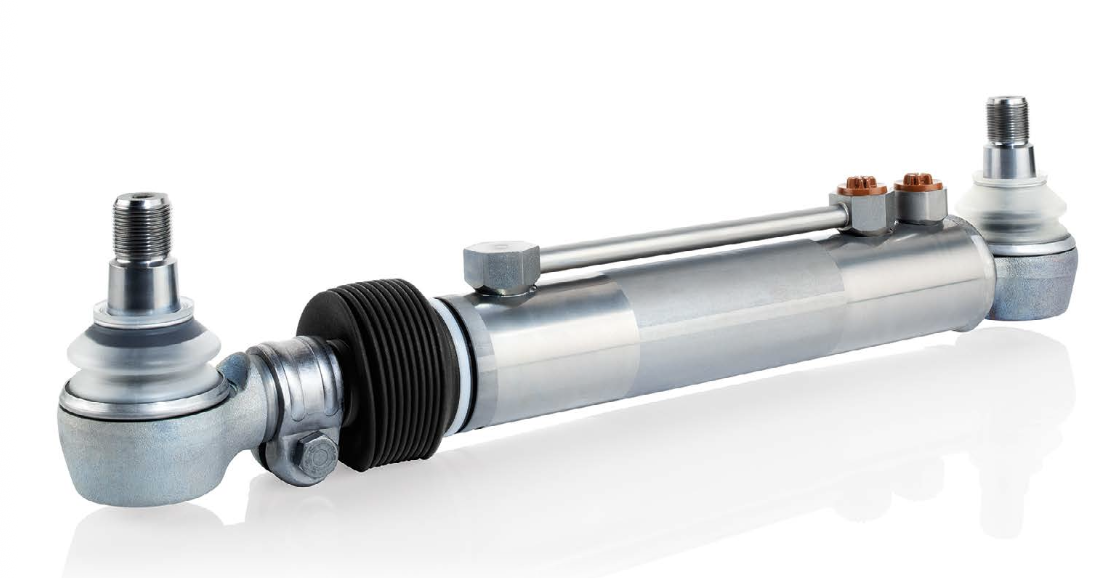
Working cylinders support the hydraulic steering system in commercial vehicles. For example, this might take place on multiple steered front axles or rear-axle steering systems. They provide the necessary hydraulic assistance that makes it easier for the wheels to turn and improves the vehicle’s directional stability.
Working cylinders are mostly maintenance-free and designed to last for the complete vehicle life cycle. Replacement is necessary if the steering function is impaired, for example due to mechanical overload or an accident.
Visual inspection and functional tests first
When working on steering systems, Bosch recommends that comprehensive visual and functional inspections are always the first step.
For this purpose, operating forces, resetting, clearances, noises and the warning lamp are checked. Workshops using Bosch’s software ESI[tronic] for Truck/OHW will find comprehensive service and installation instructions included within the SIS module.
They provide information concerning troubleshooting on electrical and mechanical systems. Afterwards, a additional in-depth diagnosis is performed to determine what action is required. If the working cylinder is affected, it may be necessary to replace the entire working cylinder or its ball joints.
Bosch advises that the following is always observed when replacing the working cylinders:
- For all work on the hydraulic steering system, extreme cleanliness must be ensured. The smallest contaminations could cause a failure of the steering support.
- When removing the working cylinder, the hydraulic oil should be drained without leaving any residue and the hydraulic steering system should be flushed.
- Threads and contact surfaces of parts to be screwed should be checked by sight. They must be free of deformation, damage and dirt.
- All self-locking screws and nuts as well as seals and locking elements must be replaced.
- All screw connections must be tightened with the tightening torque according to the manufacturer‘s instructions.
- No force! Damaged sealing ring seats or sealing surfaces can lead to failure of the working cylinder.
- After replacement, the system must be properly filled with hydraulic oil, bled and, if necessary, adjusted. Only hydraulic oils approved by the manufacturer should be used.
- Last but not least, the system‘s proper functioning must be checked during a test ride on non-public grounds.
Bosch will be exhibiting at the 2026 Auto Trade EXPO, which takes place alongside the CV Workshop EXPO from 10th -11th October at the RDS Simmonscourt in Dublin.